
Beginners who use bracelet making kits are often overwhelmed by the sheer variety of beads available. Every detail, from bead size, hole diameter, and material, can directly impact the outcome of your creation. The most challenging part is often finding the right size and hole diameter among the numerous options. Choosing the wrong size can not only ruin the overall effect but can also make the stringing process a hassle. Trust me, master these tips and you’ll be able to create beautiful bracelets with ease !
In this article, I’ll explain in detail how to measure beads, how to choose the right beads for different sizes, and how to choose the right bracelet-making kit based on the hole diameter . After reading this, you’ll have a clearer understanding of bead selection and will be more comfortable with your creations.
Accurate Measurement: The Right Way to Master Bead Sizing
Measuring beads may seem simple, but if you don’t do it correctly, you could end up choosing the wrong beads, wasting time and materials. Here are two common measurement methods, and you can choose the one that’s right for you based on your tools.
Caliper measurement: the first choice for accuracy
Calipers are essential tools for jewelry making, especially for measuring regularly shaped beads. To use them, gently open the caliper, place the bead inside, and slowly close it until the measuring jaws firmly contact the bead’s surface. Be careful not to apply excessive force, as this may damage the bead. This will allow you to see the precise measurement.
However, be careful when using calipers, especially for beads made of fragile materials, as excessive force may cause the beads to break. So, be gentle.
Ruler measurement method: simple and practical
Don’t have calipers? Don’t worry, a regular ruler can be used to measure beads, especially if you need to measure a large number of the same beads at once. While this method isn’t as precise as calipers, it’s sufficient for most situations.
To do this, lay out the beads one by one on a ruler, making sure they are tightly packed together with no gaps. Then, you can calculate the total length of the beads and divide it by the number of beads to get the average size of each bead.
However, if your beads are unusually shaped, such as teardrop or pear, you need to be extra careful. In this case, you should measure both the “length” and “width” of the beads to ensure that you get the true size of the beads.
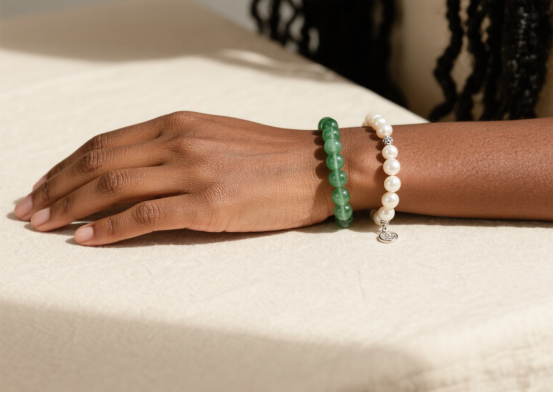
2. Choose on demand: applicable scenarios of beads of different sizes
Bead sizes range from 1mm to 16mm, and choosing the right size directly affects your final jewelry style and wearing experience. Therefore, when choosing beads, you must consider your creative needs.
Small beads (1-4mm): the first choice for delicate and exquisite style
- When it comes to small beads, 1-3mm beads are the ultimate detail-oriented accessory in a bracelet making kit . These delicate beads, ranging from 8.5 to 25.4 beads per inch, are ideal for adding a touch of sophistication to bracelets and necklace chains. However, their small size makes them difficult to attract attention when used alone, so they are often combined with beads of other sizes.
- 4mm beads are slightly larger and have become a common size. They create simple yet elegant anklets, bracelets, or thin necklaces, perfect for everyday wear. They complement casual or office attire without appearing too ostentatious, yet easily elevate your overall look.
Medium-sized beads (5-10mm): a versatile and practical choice
- Beads between 5mm and 7mm are a versatile size for bracelet making, neither too small nor too large, making them suitable for a variety of designs. For example, 5mm beads are often used in minimalist bracelets and necklaces, creating a fresh and sweet feel when paired with a small pendant. Meanwhile, 6mm and 7mm beads add a touch of presence without being overly dramatic, making them particularly suitable for creating simple yet stylish pieces.
- 8-10mm beads are relatively large and are well-suited for bracelets. 8mm beads, when made into a single loop, create a subtle visual impact without appearing too heavy. 9mm and 10mm beads are ideal for stacking, creating a sense of layering without appearing too heavy.
Large beads (11-16mm): Create a personalized statement style
Large beads 11-16mm, typically with only 1.4 to 2.3 beads per inch, are suitable for decorative accents or center stones. For example, 11-12mm beads can be used as accents in necklaces or bracelets, making them stand out at parties or gatherings. However, 13-16mm beads, if used in large quantities, can make a piece appear bulky. Therefore, they are often used as accents alongside smaller beads to add depth and color.
Adaptation key: understanding bead pore size and bead material selection
Even if you choose the right size, the wrong hole diameter can still cause your jewelry to falter. The hole diameter of your beads directly determines which bracelet making kit you should choose . If the hole diameter and material don’t match, beads can get stuck or become loose during stringing, affecting the overall effect.
Aperture characteristics of beads of different materials
- Glass beads and crystal beads: These beads usually have a pore diameter between 0.5mm and 0.8mm, and are more suitable for stringing with thinner nylon thread or fishing line.
- Gemstone Beads: The pore size of gemstone beads varies greatly, depending on the hardness of the gemstone. Harder gemstones have more uniform pore sizes, while softer gemstones may require hand drilling, resulting in less uniform pore sizes.
Bead material selection suggestions
- Beads with smaller pores: such as glass beads and crystal beads, are suitable for choosing 0.3mm to 0.6mm nylon lines or fishing lines. These lines are soft and can easily pass through beads with small pores.
- Beads with larger pore sizes, such as beads larger than 1mm, are suitable for use with slightly thicker materials such as leather ropes or metal wires. This ensures the stability of the beads and prevents them from sliding during stringing.
- Beads are heavy: such as metal beads, large gemstone beads, etc. It is recommended to use stainless steel wire, copper wire and other materials with higher hardness, so as to avoid breakage during the stringing process and be able to support the weight of the beads.

By mastering the art of selecting bead size and hole diameter, combined with the right bracelet-making kit , you’ll find bracelet -making both fun and challenging. These small details are crucial to creating a beautiful and durable piece of jewelry. I hope this guide provides valuable guidance on your jewelry-making journey. May you soon become a bracelet-making kit expert!
