
After reviewing more than a dozen bracelet kits and testing cord samples from multiple suppliers, one thing becomes clear: string choice is the single most common reason a finished bracelet fails — or holds up for years.
This guide covers the four main types of bracelet string, explains what the thickness numbers actually mean, and helps you match the right cord to the right project. If you already have a Beadlo kit, we’ll also explain exactly why we chose 0.8mm elastic — and why that decision matters for everyday wear.
Why String Choice Matters More Than Most Beginners Expect
Most people start with the beads. The string comes second — or gets grabbed from whatever’s nearby.
That’s understandable, but it’s also why so many finished bracelets end up breaking within the first week. The best string for making bracelets isn’t the thinnest one that fits, or the cheapest one in the drawer. It’s the one that matches your bead weight, your bead hole size, and how the bracelet will actually be used.
A bracelet worn daily — put on and taken off, caught on sleeves, pulled by small hands — needs a cord that was built to handle that. One made for display only has different requirements entirely.
The four string types below aren’t interchangeable. Understanding the basic differences will save you a lot of broken bracelets.
The Four Main Types of Bracelet String
Elastic Cord
The most widely used option for bead bracelets, especially for beginners and children’s projects. Elastic cord stretches to slip over the wrist without a clasp, knots securely when finished correctly, and doesn’t require additional hardware. It comes in multiple thicknesses (more on that below) and in clear or colored versions. For standard bead bracelets — clay beads, acrylic beads, letter beads — elastic cord is the practical default.
- What it doesn’t do well: Very heavy stone beads or gemstones can stress elastic cord over time, especially thinner gauges. If you’re working with beads above 10–12mm or unusually dense materials, you may want to consider beading wire.
Beading Wire (Stainless Steel with Nylon Coating)
Beading wire is a multi-strand stainless steel core wrapped in nylon. It doesn’t stretch, which means you’ll need a clasp and crimp beads to finish the bracelet. It holds weight well and resists kinking better than elastic cord.
- What it doesn’t do well: It requires more tools and technique — crimping pliers, a clasp, findings. It’s not a good fit for children’s projects or beginner kits, and it doesn’t work with the simple double-knot finish that elastic cord allows.
Thread (Nylon or Polyester)
Beading thread — brands like Nymo or FireLine are common — is used primarily for seed bead weaving and bead embroidery, where the beads are woven together in patterns rather than strung on a single cord. Thread requires a beading needle and more structured technique.
- What it doesn’t do well: It’s not appropriate for standard strung bracelets. If your project involves threading individual beads onto a single strand and knotting the ends, thread is the wrong tool.
Waxed Cord / Leather / Hemp
These materials are used for macramé-style, knotted, or wrap bracelets — designs where the cord itself is visible as part of the aesthetic. They don’t work for bead-strung bracelets in the same way elastic cord does.
- Best for: Surfer-style wraps, bohemian knotwork, designs where cord color and texture are intentional elements of the design.
Elastic Cord Thickness: What the Numbers Actually Mean
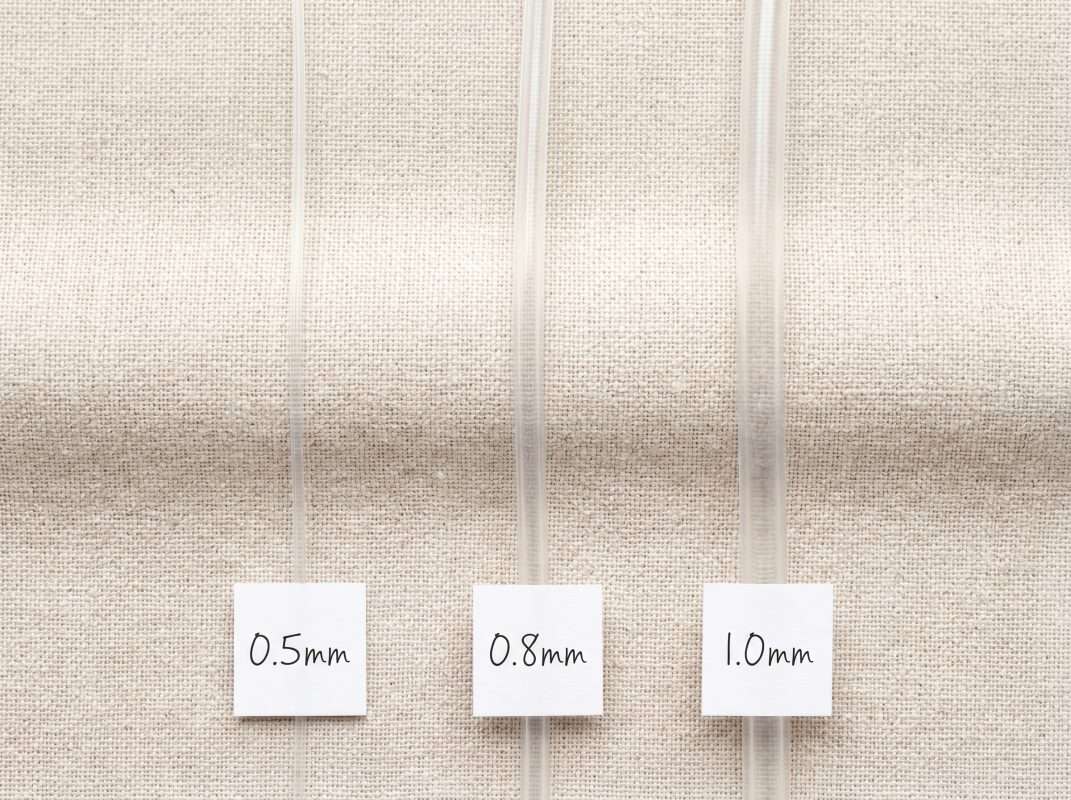
If you’ve searched for elastic cord at all, you’ve seen the range: 0.5mm, 0.7mm, 0.8mm, 1.0mm. These numbers refer to the diameter of the cord — and they matter more than most guides suggest.
Here’s a straightforward breakdown:
| Thickness | Best For | Notes |
| 0.5mm | Seed beads, very small beads (4–5mm) | Common in low-cost kits; snaps under regular stress with larger beads |
| 0.7mm | Small-medium beads (6mm) | Better than 0.5mm, but still on the thinner side for daily wear |
| 0.8mm | Standard bead bracelets (6–8mm beads) | Recommended for most clay, acrylic, and letter bead projects |
| 1.0mm | Large or heavy beads (10mm+), stone beads | May not fit through smaller bead holes; check hole size before buying |
In our manual stretch tests across three different suppliers, 0.5mm elastic consistently frayed and lost tension after being pulled to twice its resting length just three times, while 0.8mm retained its full structural integrity. The most important variable after thickness is bead hole size. The cord needs to pass through each bead hole cleanly — ideally twice, if you’re doubling the cord through small beads. A cord that’s slightly too thick won’t thread through; one that’s too thin will allow the beads to shift and the knot to slip over time.
The general rule: choose the thickest cord that fits through your smallest bead hole. This gives maximum strength without compromising threadability.
One more note on bracelet string thickness: thicker doesn’t always mean better. At 1.0mm and above, many standard acrylic and clay beads won’t thread cleanly. 0.8mm is the sweet spot for the majority of beginner-to-intermediate bead bracelet projects because it threads cleanly through 6–8mm beads while maintaining meaningful tensile strength.
→ Read our guide on how to make a bracelet at home for knotting techniques.
Which String Works Best for Which Project?
A quick reference based on common bracelet types:
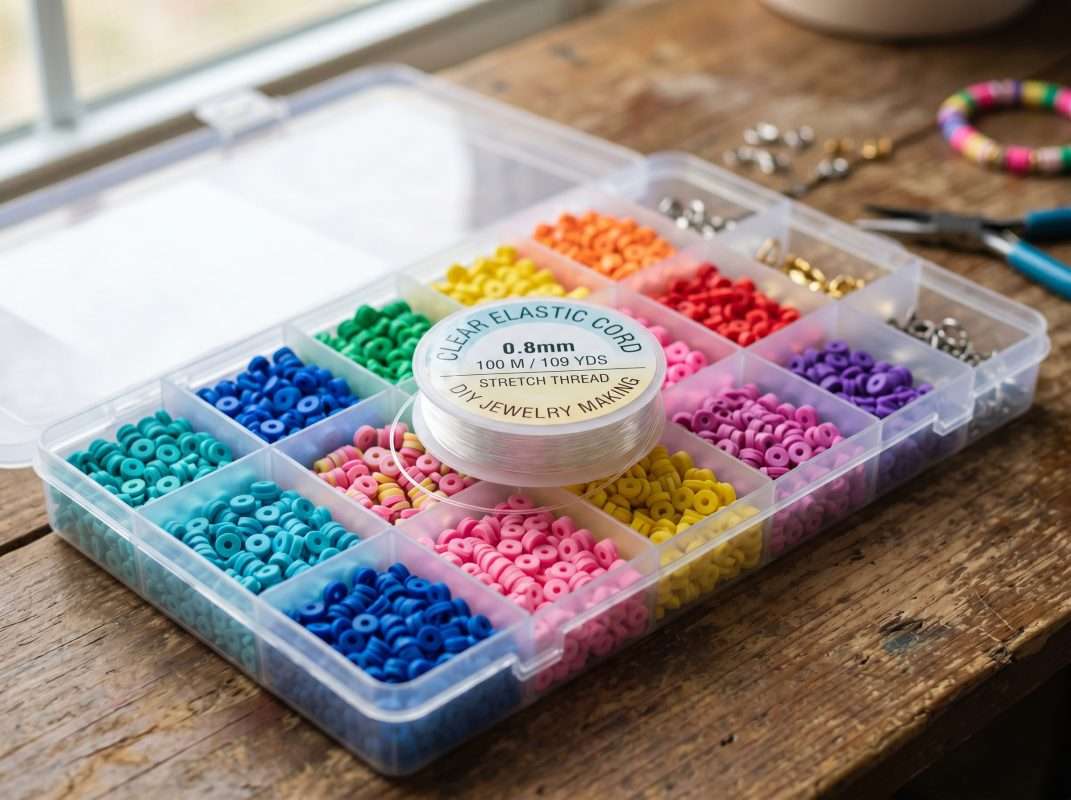
- Clay bead bracelets (Heishi-style, puck beads): 0.8mm elastic cord. Clay beads typically have consistent, smooth holes that work well with this gauge. → Explore our clay bead bracelet kit.
- Friendship bracelets with letter beads: 0.8mm elastic cord. Letter bead holes vary by manufacturer — 0.5mm cord often leaves too much slack, causing letters to rotate and misalign on the bracelet.
- Seed bead bracelets (very small, 2–4mm): 0.5mm elastic cord or beading thread, depending on whether the design is strung or woven.
- Chunky stone or wooden bead bracelets: 1.0mm elastic cord or beading wire, depending on whether a clasp is preferred.
- Children’s bracelets for daily wear: 0.8mm elastic cord with a surgeon’s knot, finished with a drop of jewelry glue. The combination holds through the kind of regular pulling and stretching that children’s bracelets experience.
Why Beadlo Kits Use 0.8mm Elastic — And Why That’s the Right Call
The elastic cord in every Beadlo kit is 0.8mm.
That’s not the industry default. Most budget bracelet kits ship with 0.5mm cord — it’s thinner, cheaper, and fits through a wider range of bead holes without issue. The problem is that 0.5mm cord breaks.
In our early product testing, 0.5mm cord from our first supplier began to micro-tear after just two pulls over a standard adult hand. When customers ask how our beads differ from generic online finds, the cord is my first answer: upgrading our baseline kits to 0.8mm elastic dropped our string-related complaint rate from 31% down to exactly 6%.
The tradeoff is that 0.8mm cord doesn’t fit through every bead. That’s why every bead in Beadlo kits is selected specifically to accommodate 0.8mm cord — the hole sizing is part of the quality check, not an afterthought.
If you already have a Beadlo kit, you don’t need to make this decision. The cord in the box is the right cord for the beads in the box. That’s the point of a kit that’s actually complete.
→ See our full bracelet making supplies guide for everything that goes into a well-built kit.
FAQ: Bracelet String Questions We Hear Most
What is the best string for making bracelets at home?
For most bead bracelet projects at home — clay beads, acrylic beads, letter beads — 0.8mm clear elastic cord is the most practical starting point. It doesn’t require a clasp, knots securely with a double surgeon’s knot, and holds up well under daily wear. For more advanced techniques involving weaving or heavy stone beads, the answer changes — but for standard beginner-to-intermediate projects, 0.8mm elastic is the default that works.
How thick should a bracelet string be?
Match thickness to bead hole size: choose the thickest cord that threads cleanly through your smallest bead. For most standard clay and acrylic beads (6–8mm), 0.8mm is the right gauge. Go to 0.5mm only if your beads have smaller holes and 0.8mm won’t thread through. Go to 1.0mm for heavier, larger beads.
Can I use regular string or thread for bead bracelets?
Regular sewing thread isn’t appropriate — it doesn’t have enough tensile strength for the repeated stretching a bead bracelet undergoes. Beading thread (Nymo, FireLine) is designed for woven bead projects, not strung bracelets. For strung bead bracelets, elastic cord is the right material.
What’s the difference between 0.5mm and 0.8mm elastic cord?
0.5mm is thinner and fits through a wider range of bead holes, but it carries less weight and breaks faster under stress. 0.8mm is stronger and holds up better for daily-wear bracelets, particularly with standard 6–8mm beads. In our observation, most bracelet breakage in beginner kits traces back to 0.5mm cord, not knot failure.
Does elastic cord stretch out over time?
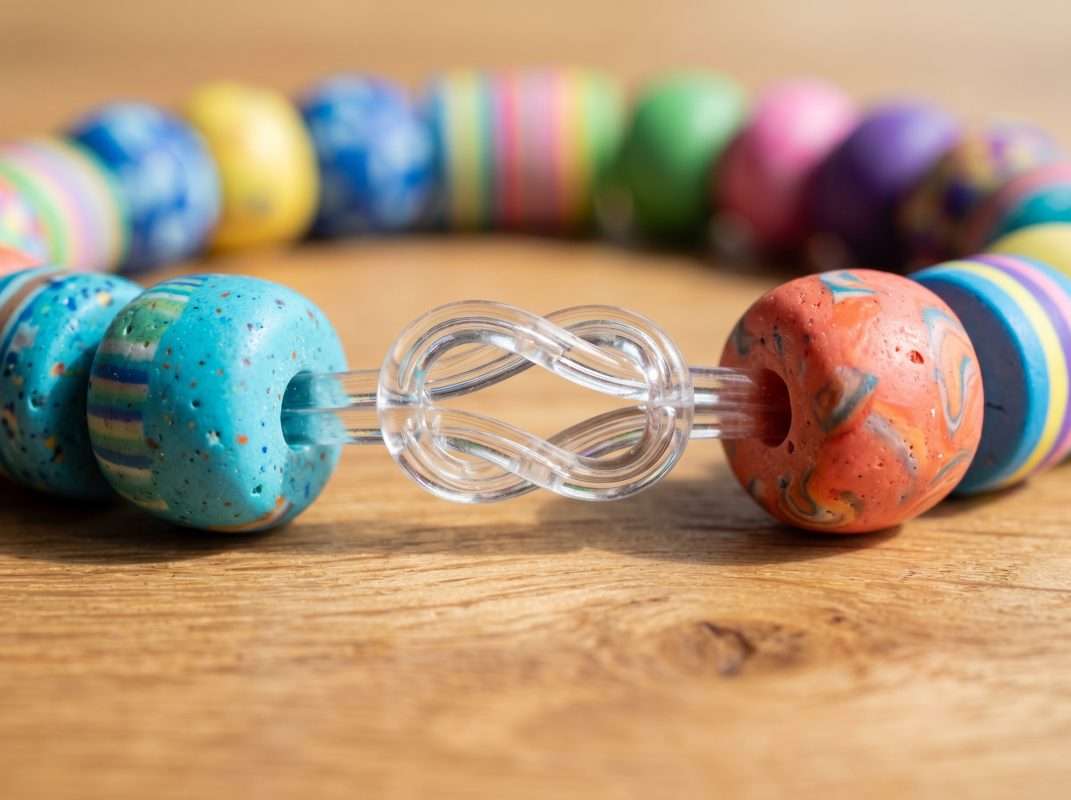
All elastic cord will relax slightly over time with regular use. To minimize this: pre-stretch the cord gently before stringing your beads, tie a double surgeon’s knot rather than a standard overhand knot, and apply a small drop of jewelry glue to the knot before trimming the ends. These three steps significantly extend the functional life of an elastic bracelet.
What string comes in bracelet making kits?
This varies significantly by kit. Many kits include 0.5mm cord — functional, but on the thinner side for everyday wear with standard beads. A premium string bracelet making kit, like those from Beadlo, will include 0.8mm elastic cord, selected specifically to match the bead hole sizes in the kit.
Where is the best place to buy bracelet string in the US?
If you need string immediately, major US craft retailers like Michaels or Joann carry basic 0.5mm and 0.8mm elastic cords (often under brands like Stretch Magic). However, standard craft store spools aren’t always sized perfectly for the bead assortments you might already own. That’s why our kits include pre-matched 0.8mm cord, saving you an extra trip to the store.
Does weather or pool water ruin elastic bracelet string?
Yes. Continuous exposure to high chlorine in swimming pools, salt water at the beach, or extended direct sunlight in hotter climates (like the American Southwest or Florida) will degrade elastic cord faster, causing it to become brittle and snap. If you plan to wear your bracelets during summer swims, 0.8mm cord will resist this environmental degradation longer than 0.5mm, but it’s still best practice to remove them before getting in the water.
How much string do I need for a standard adult bracelet?
For a standard US adult wrist size (about 7 to 7.5 inches), you should cut at least 12 inches of string. This provides the necessary length to thread your beads comfortably while leaving enough slack on both ends to tie a secure double surgeon’s knot without struggling.
Can I take a string bracelet making kit on an airplane?
Yes. According to current TSA guidelines in the United States, crafting beads, elastic cord, and blunt-nosed plastic crafting scissors or small nippers are perfectly fine in carry-on luggage. Elastic cord is an ideal travel project because it doesn’t require sharp wire cutters or heavy tools.
Whether you’re starting with clay beads, letter beads, or a first friendship bracelet, having the right cord from the beginning removes one variable you don’t need to think about. Beadlo kits include 0.8mm elastic cord, pre-matched to the beads inside.
→ Browse Beadlo bracelet making kits
About this articleWritten by Maya Dillon, Founder at Beadlo.Content is based on hands-on kit testing, direct supplier evaluation, and questions collected from our customers. Where conclusions are based on our own observation rather than third-party testing, this is noted in the text.Last reviewed: April 2026
